

.png) 手机流量卡
手机流量卡 免费领卡·号卡店铺
 关于本站
关于本站Python 爬虫实战教程:从零构建数据采集系统
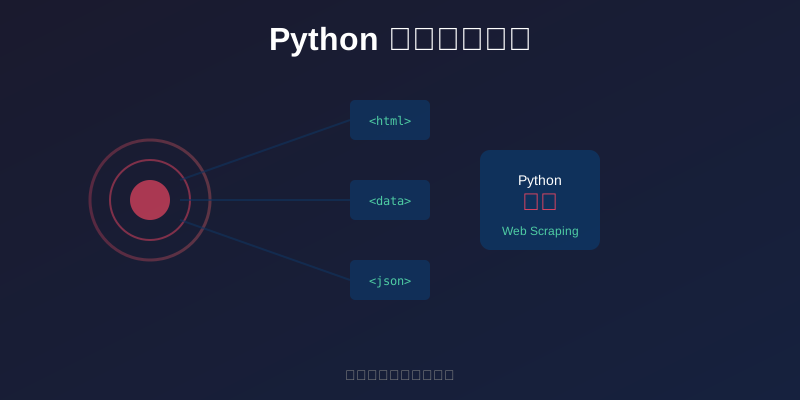
网络爬虫是数据获取的利器,掌握它意味着拥有了从互联网海洋中提取价值数据的能力。本文将从基础概念到实战案例,手把手教你构建一个完整的 Python 爬虫系统。
一、爬虫核心概念
在开始写代码之前,我们需要理解爬虫的基本原理。网络爬虫(Web Crawler)是一种自动化程序,它模拟浏览器向网站服务器发送请求,获取网页内容,然后从中提取需要的数据。
爬虫的工作流程可以概括为四个步骤:
- 发送请求:向目标网站发送 HTTP 请求,获取网页内容
- 解析内容:使用解析库提取网页中的目标数据
- 存储数据:将提取的数据保存到文件或数据库
- 继续爬取:根据需要继续爬取其他页面
1.1 HTTP 协议基础
理解 HTTP 协议是爬虫开发的基础。当我们在浏览器中输入 URL 时,浏览器会向服务器发送一个 HTTP 请求,服务器返回响应内容。爬虫要做的就是模拟这个过程。
一个完整的 HTTP 请求包含以下要素:
# HTTP 请求的基本组成部分
"""
请求方法:GET、POST、PUT、DELETE 等
请求头(Headers):包含 User-Agent、Cookie、Referer 等
请求体(Body):POST 请求时携带的数据
请求 URL:目标资源的地址
"""

# 常见的请求头示例
headers = {
    "User-Agent": "Mozilla/5.0 (Windows NT 10.0; Win64; x64) AppleWebKit/537.36",
    "Accept": "text/html,application/xhtml+xml,application/xml;q=0.9",
    "Accept-Language": "zh-CN,zh;q=0.9,en;q=0.8",
    "Accept-Encoding": "gzip, deflate, br",
    "Connection": "keep-alive",
    # Cookie 用于保持登录状态
    "Cookie": "session_id=abc123; user_token=xyz789"
}
1.2 网页解析技术
获取到网页内容后,我们需要从中提取目标数据。常用的解析技术有三种:
- 正则表达式:最基础但灵活的解析方式,适合简单的文本提取
- BeautifulSoup:Python 最流行的 HTML 解析库,API 友好
- XPath:强大的路径选择语言,适合复杂的结构化提取
二、环境搭建与基础库
2.1 安装必要的库
# 安装爬虫常用库
# pip install requests beautifulsoup4 lxml

# 验证安装
import requests
from bs4 import BeautifulSoup

print(f"requests 版本: {requests.__version__}")
print("BeautifulSoup 安装成功!")
2.2 requests 库基础
requests 是 Python 最流行的 HTTP 库,它的设计理念是"HTTP for Humans",使用起来非常简单直观。
import requests

# 基础 GET 请求
def basic_get_request():
    """发送最简单的 GET 请求"""
    url = "https://httpbin.org/get"
    response = requests.get(url)

    # 检查响应状态
    if response.status_code == 200:
        print("请求成功!")
        print(f"响应内容: {response.json()}")
    else:
        print(f"请求失败,状态码: {response.status_code}")

# 带参数的 GET 请求
def get_with_params():
    """发送带查询参数的 GET 请求"""
    url = "https://httpbin.org/get"
    params = {
        "keyword": "Python爬虫",
        "page": 1,
        "limit": 20
    }

    response = requests.get(url, params=params)
    print(f"实际请求URL: {response.url}")
    print(f"响应数据: {response.json()}")

# POST 请求(用于表单提交)
def post_request():
    """发送 POST 请求"""
    url = "https://httpbin.org/post"
    data = {
        "username": "test_user",
        "password": "test_pass"
    }

    response = requests.post(url, data=data)
    print(f"POST 响应: {response.json()}")

# 带请求头的请求
def request_with_headers():
    """模拟浏览器发送请求"""
    url = "https://httpbin.org/headers"
    headers = {
        "User-Agent": "Mozilla/5.0 (Windows NT 10.0; Win64; x64) AppleWebKit/537.36 (KHTML, like Gecko) Chrome/120.0.0.0 Safari/537.36",
        "Accept": "text/html,application/xhtml+xml,application/xml;q=0.9,image/webp,*/*;q=0.8",
        "Accept-Language": "zh-CN,zh;q=0.9,en;q=0.8"
    }

    response = requests.get(url, headers=headers)
    print(f"请求头信息: {response.json()}")
2.3 BeautifulSoup 解析网页
BeautifulSoup 是 Python 最强大的网页解析库之一,它能够将复杂的 HTML 文档转换为树形结构,方便我们提取数据。
from bs4 import BeautifulSoup
import requests
def parse_html_example():
"""BeautifulSoup 解析示例"""
# 示例 HTML
html_doc = """
爬虫测试页面
"""
# 创建 BeautifulSoup 对象
soup = BeautifulSoup(html_doc, "html.parser")
# 1. 获取标签内容
title = soup.title.string
print(f"页面标题: {title}")
# 2. 通过 id 查找元素
main_title = soup.find(id="main-title")
print(f"主标题: {main_title.string}")
# 3. 通过 class 查找所有匹配元素
items = soup.find_all(class_="item")
for item in items:
link = item.find("a")
print(f"文章链接: {link.string} -> {link["href"]}")
# 4. 使用 CSS 选择器
article_links = soup.select("ul.article-list li a")
for link in article_links:
print(f"CSS选择器结果: {link.string}")
# 实战:爬取真实网页
def scrape_real_page():
"""爬取真实网页示例"""
url = "https://example.com"
headers = {
"User-Agent": "Mozilla/5.0 (Windows NT 10.0; Win64; x64) AppleWebKit/537.36"
}
response = requests.get(url, headers=headers)
soup = BeautifulSoup(response.text, "html.parser")
# 提取所有链接
links = soup.find_all("a")
for link in links:
href = link.get("href")
text = link.string
if href and text:
print(f"链接: {text} -> {href}")
三、实战案例:构建新闻爬虫
下面我们通过一个完整的实战案例,演示如何构建一个新闻数据采集系统。
3.1 爬虫架构设计
"""
新闻爬虫系统架构

1. 爬取模块:负责发送请求、获取网页内容
2. 解析模块:负责从网页中提取新闻数据
3. 存储模块:负责将数据保存到文件或数据库
4. 调度模块:负责管理爬取任务、控制爬取频率
"""

import requests
from bs4 import BeautifulSoup
import json
import time
import random
from typing import List, Dict, Optional
from dataclasses import dataclass
from datetime import datetime

# 定义数据结构
@dataclass
class NewsArticle:
    """新闻文章数据类"""
    title: str           # 标题
    author: str          # 作者
    publish_time: str    # 发布时间
    content: str         # 内容摘要
    url: str             # 原文链接
    crawl_time: str      # 爬取时间

class NewsSpider:
    """新闻爬虫类"""

    def __init__(self):
        # 初始化请求头,模拟浏览器
        self.headers = {
            "User-Agent": "Mozilla/5.0 (Windows NT 10.0; Win64; x64) AppleWebKit/537.36 (KHTML, like Gecko) Chrome/120.0.0.0 Safari/537.36",
            "Accept": "text/html,application/xhtml+xml,application/xml;q=0.9,image/webp,*/*;q=0.8",
            "Accept-Language": "zh-CN,zh;q=0.9,en;q=0.8",
        }
        # 请求会话(保持 Cookie)
        self.session = requests.Session()
        self.session.headers.update(self.headers)
        # 已爬取的 URL 集合(去重)
        self.crawled_urls = set()

    def fetch_page(self, url: str, retry: int = 3) -> Optional[str]:
        """
        获取网页内容

        Args:
            url: 目标 URL
            retry: 重试次数

        Returns:
            网页 HTML 内容,失败返回 None
        """
        for i in range(retry):
            try:
                response = self.session.get(url, timeout=10)
                response.raise_for_status()
                response.encoding = response.apparent_encoding
                return response.text
            except requests.RequestException as e:
                print(f"请求失败 (尝试 {i+1}/{retry}): {e}")
                time.sleep(2)  # 等待后重试
        return None

    def parse_news_list(self, html: str) -> List[str]:
        """
        从列表页解析新闻链接

        Args:
            html: 列表页 HTML

        Returns:
            新闻详情页 URL 列表
        """
        soup = BeautifulSoup(html, "html.parser")
        news_links = []

        # 查找所有新闻链接(根据实际网站结构调整选择器)
        for link in soup.select("a.news-item"):
            href = link.get("href")
            if href and href not in self.crawled_urls:
                news_links.append(href)
                self.crawled_urls.add(href)

        return news_links

    def parse_news_detail(self, html: str, url: str) -> Optional[NewsArticle]:
        """
        解析新闻详情页

        Args:
            html: 详情页 HTML
            url: 新闻 URL

        Returns:
            NewsArticle 对象,解析失败返回 None
        """
        soup = BeautifulSoup(html, "html.parser")

        try:
            # 提取标题
            title_elem = soup.select_one("h1.article-title")
            title = title_elem.string.strip() if title_elem else "未知标题"

            # 提取作者
            author_elem = soup.select_one(".author-name")
            author = author_elem.string.strip() if author_elem else "未知作者"

            # 提取发布时间
            time_elem = soup.select_one(".publish-time")
            publish_time = time_elem.string.strip() if time_elem else "未知时间"

            # 提取内容
            content_elem = soup.select_one(".article-content")
            content = content_elem.get_text(strip=True)[:200] if content_elem else ""

            return NewsArticle(
                title=title,
                author=author,
                publish_time=publish_time,
                content=content,
                url=url,
                crawl_time=datetime.now().strftime("%Y-%m-%d %H:%M:%S")
            )
        except Exception as e:
            print(f"解析失败: {e}")
            return None

    def save_to_json(self, articles: List[NewsArticle], filename: str):
        """保存数据到 JSON 文件"""
        data = [article.__dict__ for article in articles]
        with open(filename, "w", encoding="utf-8") as f:
            json.dump(data, f, ensure_ascii=False, indent=2)
        print(f"已保存 {len(articles)} 条新闻到 {filename}")

    def run(self, start_url: str, max_pages: int = 5):
        """
        运行爬虫

        Args:
            start_url: 起始 URL
            max_pages: 最大爬取页数
        """
        articles = []

        for page in range(1, max_pages + 1):
            print(f"正在爬取第 {page} 页...")

            # 构建列表页 URL
            list_url = f"{start_url}?page={page}"

            # 获取列表页
            html = self.fetch_page(list_url)
            if not html:
                continue

            # 解析新闻链接
            news_links = self.parse_news_list(html)
            print(f"发现 {len(news_links)} 条新闻")

            # 爬取每篇新闻详情
            for link in news_links:
                detail_html = self.fetch_page(link)
                if detail_html:
                    article = self.parse_news_detail(detail_html, link)
                    if article:
                        articles.append(article)
                        print(f"已爬取: {article.title}")

                # 随机延迟,避免被封
                time.sleep(random.uniform(1, 3))

        # 保存数据
        self.save_to_json(articles, "news_data.json")
        print(f"爬取完成,共获取 {len(articles)} 条新闻")

# 使用示例
if __name__ == "__main__":
    spider = NewsSpider()
    spider.run("https://example-news-site.com/news", max_pages=3)
四、反爬虫策略与应对
随着爬虫技术的普及,越来越多的网站部署了反爬虫机制。了解这些机制并掌握应对策略,是爬虫工程师的必备技能。
4.1 常见反爬虫手段
"""
常见的反爬虫手段:

1. User-Agent 检测
   - 检查请求头中的 User-Agent 是否为浏览器

2. IP 频率限制
   - 限制单个 IP 的请求频率
   - 超过阈值则封禁 IP

3. Cookie/Session 验证
   - 需要登录才能访问
   - 通过 Cookie 追踪用户行为

4. JavaScript 渲染
   - 数据通过 JS 动态加载
   - 直接请求 HTML 无法获取数据

5. 验证码
   - 高频访问时弹出验证码
   - 图形验证码、滑块验证码等

6. 浏览器指纹检测
   - 检测 Canvas、WebGL、字体等指纹
   - 识别是否为真实浏览器
"""

# 应对策略示例
import random
import time

# 1. User-Agent 轮换
USER_AGENTS = [
    "Mozilla/5.0 (Windows NT 10.0; Win64; x64) AppleWebKit/537.36 (KHTML, like Gecko) Chrome/120.0.0.0 Safari/537.36",
    "Mozilla/5.0 (Macintosh; Intel Mac OS X 10_15_7) AppleWebKit/537.36 (KHTML, like Gecko) Chrome/120.0.0.0 Safari/537.36",
    "Mozilla/5.0 (Windows NT 10.0; Win64; x64; rv:121.0) Gecko/20100101 Firefox/121.0",
    "Mozilla/5.0 (Macintosh; Intel Mac OS X 10_15_7) AppleWebKit/605.1.15 (KHTML, like Gecko) Version/17.2 Safari/605.1.15"
]

def get_random_user_agent():
    """获取随机 User-Agent"""
    return random.choice(USER_AGENTS)

# 2. 请求延迟与随机化
def smart_delay():
    """智能延迟,模拟真实用户行为"""
    # 基础延迟 1-3 秒,随机浮动
    delay = random.uniform(1, 3)
    # 偶尔长延迟(模拟用户阅读)
    if random.random() < 0.1:
        delay += random.uniform(3, 8)
    time.sleep(delay)

# 3. 使用代理 IP
def request_with_proxy(url: str, proxy_list: list):
    """使用代理 IP 发送请求"""
    for proxy in proxy_list:
        try:
            proxies = {
                "http": f"http://{proxy}",
                "https": f"http://{proxy}"
            }
            response = requests.get(
                url,
                headers={"User-Agent": get_random_user_agent()},
                proxies=proxies,
                timeout=10
            )
            return response
        except Exception:
            continue
    return None
4.2 使用 Selenium 处理动态内容
"""
Selenium 是一个自动化测试工具,
可以模拟真实浏览器操作,
用于处理 JavaScript 动态加载的页面。

安装: pip install selenium webdriver-manager
"""

from selenium import webdriver
from selenium.webdriver.common.by import By
from selenium.webdriver.support.ui import WebDriverWait
from selenium.webdriver.support import expected_conditions as EC
from selenium.webdriver.chrome.service import Service
from webdriver_manager.chrome import ChromeDriverManager

def scrape_dynamic_page(url: str):
    """使用 Selenium 爬取动态加载的页面"""

    # 配置 Chrome 选项
    options = webdriver.ChromeOptions()
    options.add_argument("--headless")  # 无头模式
    options.add_argument("--disable-gpu")
    options.add_argument("--no-sandbox")
    options.add_argument("--disable-dev-shm-usage")
    options.add_argument(f"--user-agent={get_random_user_agent()}")

    # 启动浏览器
    driver = webdriver.Chrome(
        service=Service(ChromeDriverManager().install()),
        options=options
    )

    try:
        # 访问页面
        driver.get(url)

        # 等待内容加载(最多等待 10 秒)
        wait = WebDriverWait(driver, 10)
        wait.until(EC.presence_of_element_located((By.CLASS_NAME, "content")))

        # 模拟滚动(触发懒加载)
        driver.execute_script("window.scrollTo(0, document.body.scrollHeight);")
        time.sleep(2)

        # 提取数据
        elements = driver.find_elements(By.CSS_SELECTOR, ".news-item")
        for elem in elements:
            title = elem.find_element(By.TAG_NAME, "h3").text
            print(f"标题: {title}")

        # 获取页面源码
        page_source = driver.page_source
        return page_source

    finally:
        driver.quit()

# 使用示例
if __name__ == "__main__":
    url = "https://example-dynamic-site.com"
    html = scrape_dynamic_page(url)
五、数据存储与处理
"""
数据存储的多种方式
"""

import json
import csv
import sqlite3
from datetime import datetime

# 1. JSON 存储
def save_to_json(data: list, filename: str):
    """保存数据到 JSON 文件"""
    with open(filename, "w", encoding="utf-8") as f:
        json.dump(data, f, ensure_ascii=False, indent=2)

# 2. CSV 存储
def save_to_csv(data: list, filename: str):
    """保存数据到 CSV 文件"""
    if not data:
        return

    with open(filename, "w", encoding="utf-8-sig", newline="") as f:
        writer = csv.DictWriter(f, fieldnames=data[0].keys())
        writer.writeheader()
        writer.writerows(data)

# 3. SQLite 数据库存储
def save_to_sqlite(data: list, db_name: str = "spider.db"):
    """保存数据到 SQLite 数据库"""
    conn = sqlite3.connect(db_name)
    cursor = conn.cursor()

    # 创建表
    cursor.execute("""
        CREATE TABLE IF NOT EXISTS articles (
            id INTEGER PRIMARY KEY AUTOINCREMENT,
            title TEXT NOT NULL,
            author TEXT,
            publish_time TEXT,
            content TEXT,
            url TEXT UNIQUE,
            crawl_time TEXT
        )
    """)

    # 插入数据
    for item in data:
        cursor.execute("""
            INSERT OR IGNORE INTO articles
            (title, author, publish_time, content, url, crawl_time)
            VALUES (?, ?, ?, ?, ?, ?)
        """, (
            item.get("title"),
            item.get("author"),
            item.get("publish_time"),
            item.get("content"),
            item.get("url"),
            item.get("crawl_time")
        ))

    conn.commit()
    conn.close()

# 使用示例
sample_data = [
    {
        "title": "Python 爬虫入门",
        "author": "张三",
        "publish_time": "2026-04-04",
        "content": "这是一篇爬虫教程...",
        "url": "https://example.com/1",
        "crawl_time": datetime.now().strftime("%Y-%m-%d %H:%M:%S")
    }
]

# save_to_json(sample_data, "data.json")
# save_to_csv(sample_data, "data.csv")
# save_to_sqlite(sample_data)
六、爬虫道德与法律
在使用爬虫时,我们必须遵守道德规范和法律法规:
- 遵守 robots.txt:检查网站的 robots.txt 文件,尊重网站的爬取规则
- 控制爬取频率:避免对服务器造成过大压力
- 尊重版权:不要爬取和传播受版权保护的内容
- 保护隐私:不要爬取个人隐私数据
- 合法使用:确保数据用途合法合规
import urllib.robotparser

def check_robots_txt(base_url: str, user_agent: str = "*") -> bool:
    """检查 robots.txt 是否允许爬取"""
    rp = urllib.robotparser.RobotFileParser()
    rp.set_url(f"{base_url}/robots.txt")
    rp.read()

    # 检查特定路径是否允许爬取
    test_path = "/"
    return rp.can_fetch(user_agent, test_path)

# 使用示例
# allowed = check_robots_txt("https://example.com")
# print(f"是否允许爬取: {allowed}")
总结
本文从零开始,系统地介绍了 Python 爬虫的开发流程:
- 基础概念:理解 HTTP 协议、网页结构、解析技术
- 核心库使用:掌握 requests 和 BeautifulSoup 的用法
- 实战案例:构建完整的新闻爬虫系统
- 反爬策略:了解常见反爬手段及应对方法
- 数据存储:多种方式保存爬取的数据
- 法律道德:合规使用爬虫技术
爬虫是一项强大的数据获取技术,但请务必在合法合规的前提下使用。希望本文能帮助你快速入门 Python 爬虫开发!
推荐阅读:
本文链接:https://www.kkkliao.cn/?id=986 转载需授权!
版权声明:本文由廖万里的博客发布,如需转载请注明出处。